What Should I Paint on for Art Gallery Quality
 Knowing the deviation between good and bad art tin can be difficult. You can't e'er trust the art experts; many times it's difficult to fifty-fifty understand them. Since I believe that it's of import to brand up your own mind near art, I decided to write this article to help each and every 1 of you judge art for yourself.
(It's a little longer than the other articles and then far, so feed the dog or put the kids to bed, and don't say I didn't warn you!)
Quick announcement - EmptyEasel has created a quicker, easier way for artists to have their own art website. Click here to larn more and get a simple art website of your own!
I've come upward with five characteristics that you can use to make up one's mind the quality of art, ranging from the paintings in your local gallery to the foreign contemporary sculpture your boss added right exterior your office.
The characteristics I found were beauty, skill, inherent pregnant, uniqueness, and fulfilled intent. I'll explain each of these throughout the article.
I'thousand convinced that anyone can use their own central knowledge to compare artwork based on these five inherent properties. Fifty-fifty if other people accept a different opinion than you do nigh a particular work of art, this article should assistance yous explicate how you lot came to your determination.
All right, so on the footing that all art is non created equal, let'southward go to the nitty-gritty and break down these five characteristics of art.
Beauty in Fine art
Beauty is, and always will exist, in the "eye of the beholder." Your decision well-nigh the beauty or lack of beauty in a detail work of fine art is instinctive and natural. In fact, you probably won't even have to make that decision, you'll but either be captivated past a piece of fine art or you won't.
People within the same social context frequently concur on what is beautiful, so you'll probably find others close by who will similar the aforementioned things as you lot practise. Some aspects of fine art that are generally appealing to people are:
1. Repeating shapes, patterns, and symmetry.
2. Colors, especially colors that complement or heighten each other.
3. Textures, both visual and physical (like thick, impasto pigment).
four. Crops and compositions that focus the centre and keep the viewers' attending.
5. Motion or flow to guide viewers through the fine art.
6. Correct or highly-seasoned proportions of figures and objects.
7. Presentation and framing.
Yous won't need to take a checklist into the galleries for this since your middle volition naturally be fatigued to the art you adopt. Like I mentioned before, this is the easy one. All you lot have to do is answer the question, "Do I like this?" Of class, if you decide to ask why you like it, then the list above might come up in handy.
Skill and technique
Technical skill is the most comparable and measurable attribute of art. As you look at a painting (or any other work of art) you lot probably will be able to make up one's mind how skillfully it was created simply past comparison with other works.
First, compare the works to other art y'all've seen in that medium before—if it is a painting, for instance, decide whether this artist is more talented than others yous've seen. It might be difficult if yous're simply starting out, and in that instance, don't permit it worry yous. It will only take a short amount of time for yous to see the differences between a skillful painting and 1 that's poorly done.
Second, wait at all the artwork on display by the artist. Yous might notice that some are more impressive than others, or appear amend made, and y'all'll certainly accept an thought of one or two that are the best out of the entire group.
Third, await at each piece of work of art itself. Are they individually consistent? Are there places that you can see odd markings compared to another area within the same piece? Sometimes art may wait rushed or strange, simply if it is created in a similar fashion throughout the entire piece and then the outcome is virtually likely intentional. If not, so that work may not be as practiced as some others that are more internally cohesive.
Judging the level of skill in a work of art is probably the most hard affair I'm suggesting to do in this article. Over time and with more exposure to art yous volition eventually come to a greater understanding of different mediums. Plus, if yous're lucky enough to be an creative person yourself y'all'll probably observe out that you instinctively have a better grasp of other mediums already.
Inherent meaning
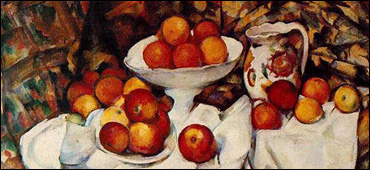
Art is powerful, non just for its dazzler or the talent needed for its cosmos, simply because it tin can cause emotion, brand political statements, or challenge preconceived ideas. Of form not all works of art are intended to be and so thought-provoking. A however life of oranges and apples, for case, usually won't accept a deeper meaning. If it does, I think the creative person deserves more than credit than for a traditional still life.
Here are five levels of pregnant in fine art, which I've listed in guild of increasing importance.
one. Purely representational fine art – Made simply for visual entreatment, with no deeper intent.
2. Fine art that references other fine art – It "tips its lid" to some other work, possibly providing a fresh perspective or continuing a chat that another artist began.
3. Fine art that tells a story, or evokes a specific emotion – This is art that begins to affect you. It might cause you to understand, empathise or feel what'due south beingness depicted.
4. Art that makes a statement – Here the artist is clearly speaking through the work, actively promoting a cause or perchance bringing attention to an issue that's important to him or her.
v. Art that is an allegory or metaphor – This is art that contains more than one meaning, and possibly several. It utilise symbolic imagery or deal with more intangible human issues, and yet the artwork should all the same work equally a visually appealing cosmos.
Look for these when yous wait at art. Finding meaning or emotion in art opens upwards a whole new realm of enjoyment, and will deepen your appreciation of artists who incorporate it into their work.
Uniqueness
This is the attribute of art which relates to not only what the artist is depicting but too how the artist is depicting it.
Skilful art either explores new subjects, or old subjects in a way that hasn't been done before. When you lot look at fine art, enquire yourself what (if anything) is dissimilar in the work from all the other art you've seen. Sometimes it will leap out at y'all, sometimes it won't. If yous do notice something different, determine for yourself whether that unique quality distracts from or enhances the piece.
There'due south a happy medium, I believe, in finding fine art that stands out from the crowd merely doesn't use gimmicks or cause distractions.
Fulfilled intent
What is the creative person trying to say? I hear this question a lot, and for the nigh role there's a elementary way to find out. If yous're at a gallery, read the artist statement. Many artists but want to accurately portray a subject, or to express an emotion. The important thing is for the creative person to exist in command of the art. If the intent is one thing, the art shouldn't say something else. The artist statement should deepen and strengthen the viewers' understanding of the fine art.
 I'd propose that when you go to a solo testify, briefly scan all of the works being displayed so you can become an thought of the creative person's style and note any constant themes, emotions, or ideas.
So go through each piece of art again, but more slowly, to actually study them. Accept your fourth dimension and determine what you lot remember of each one according to the five characteristics mentioned in this commodity. After that, cheque out the artist's statement.
Compare the artist's intent with what you had previously understood the intent to be, and then armed with that noesis (trust me, sometimes it'll blow your mind) make one last round of the gallery to meet how your opinions have changed.
If you experienced the artist's intent before reading the argument, first-class. If you only got it after reading the artist'due south statement, that's OK too, just not quite as expert.
This method keeps the art from being overshadowed immediately by what the artist is saying about his or her work. It lets the fine art speak for itself, yet the creative person still gets a chance to clarify what is meant in case you miss the point on your own.
Of course, if you tin can't even understand what the creative person is saying in the artist statement, then just try to relish the art for its visual impact and don't worry about it. The intent probably wasn't very clear for that artist either.
To sum it all up:
Good art should appeal to you. It volition be skillfully made, most probable past an creative person who has created other works in a similar fashion.
The best fine art has significant beyond merely an image; peradventure it volition bring you lot to tears, make y'all express joy, or remind you of something you'd almost forgotten. It also stands out in a oversupply, and dares to exist different.
About importantly (in my opinion) proficient art is understandable, although it may make you lot remember in ways you never expected to.
I promise you constitute this commodity helpful; I know that in writing information technology I've solidified some of my ain views about art. Experience free to ship me your ain comments or feedback as well.
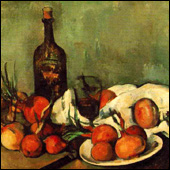
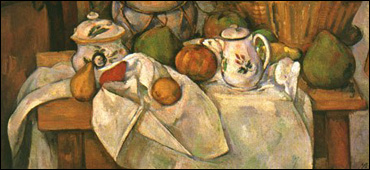
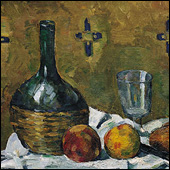
*All images in this post are details from however life paintings by Cezanne.

Notation: You may likewise be interested in EE's step-by-step cartoon guide for artists. Click below to learn more!
This postal service may contain affiliate links.
Source: https://emptyeasel.com/2006/11/18/how-to-judge-art-five-qualities-you-can-critique/

Enviar um comentário for "What Should I Paint on for Art Gallery Quality"